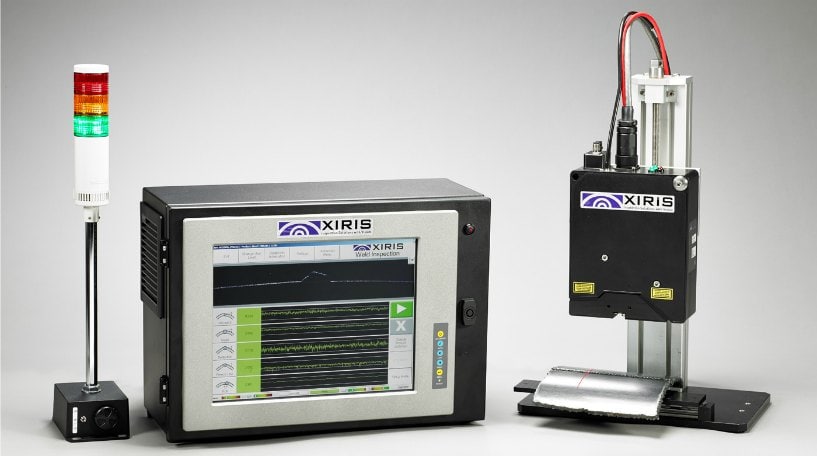

Print Inspection Systems

In today's manufactured goods, print decoration plays a major role in defining brand quality of a consumer or industrial product. Whether verifying printed images generated by a screen, offset, pad or digital printing process, Xiris Print Inspection systems can detect:

Mechanical Position Print Quality Defects Surface Quality Defects
Label Orientation Pinholes Squeegee Marks
Label Position Color Shifts Scratches
Ghosting / Feathering Dust
Missing / Excessing Ink Print Texture and Thickness
Watermarks

Over 1000 Print Inspection Systems Installed Worldwide.

Getting the right part to the right manufacturing process or to the right customer is always a challenge. By adding a Xiris Code Reading device, you can ensure that every part is the right part at the right time, delivered to the right customer. Xiris Code Reading systems can provide:

  • 1D Barcode Verification / Reading (multiple formats)
  • 2D Barcode Verification / Reading (multiple formats)
  • Optical Character Verification / Reading (programmable fonts)

ID-3500 Ident Code Verification

The Xiris ID3500 Ident Code Verification System is used by Optical Disc manufacturers and replicators worldwide to read and verify that the right disc is in the right place during the production process. The ID-3500 reads and verifies the Bar Code or Alphanumeric code in the hub area on the back of each optical disc, verifying the disc content prior to printing or packaging. By verifying that each disc is correct during replication, printing and packaging, replicators can be assured that every disc shipped to their customers is the correct disc!

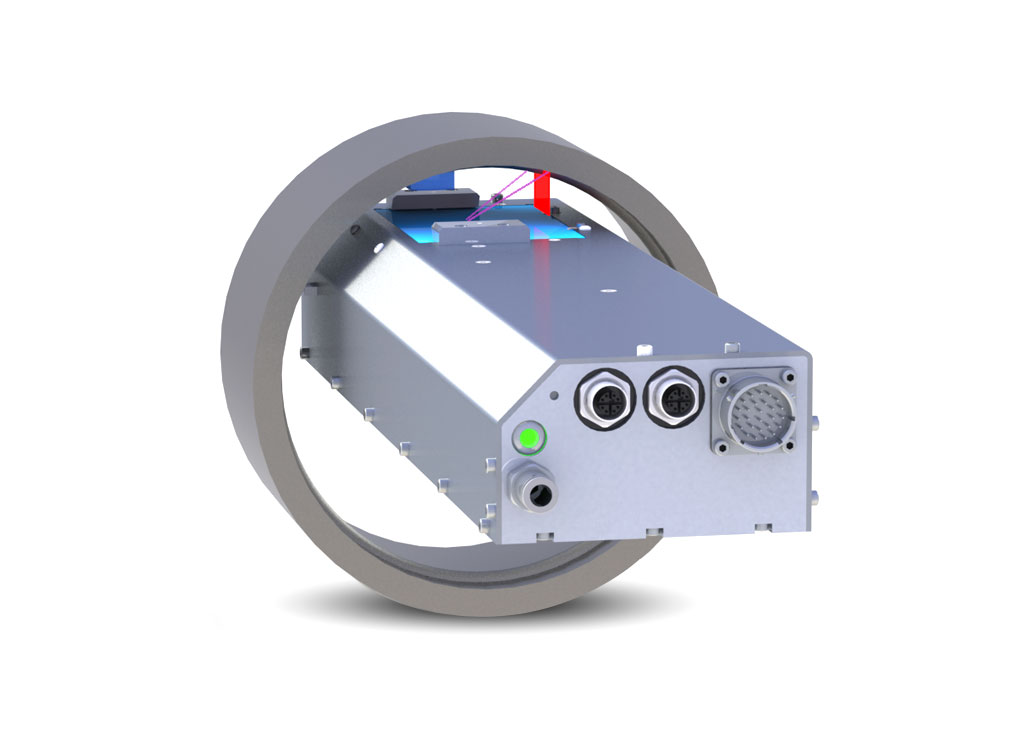
Each ID-3500 Ident Code Verification System includes up to four camera modules, a panel mount or rack mounted PC plus a separate monitor, keyboard and mouse. The camera module is designed for easy integration into all standard CD/DVD packaging and printing machines. It can be either bottom mounted with a centering pin, or top mounted to verify the disc’s code from the label side.

Find the wrong disc before your customers do with the ID-3500!

Benefits / Features of the ID - 3500

  • Highly accurate verification system eliminates risk of false rejects
  • Capable of reading all formats of Optical Discs
  • Multi-spectral solid state light source allows for reading multi-colored discs
  • Suitable for installation into equipment with up to four disc placement positions
  • Operates: up to 180 ppm per camera head
  • Fully automatic bar code and alphanumerical font recognition

ID-3500 Technical Specifications

General

Camera Type Single chip Monochrome CMOS camera with Firewire interface
• 1280 X 1024 pixels X 256 grey levels (standard)
Camera Module Size (max) 279 mm length X 129 mm diameter
Disc Formats Supported • CD/DVD5
• DVD9 Half/Full Height
• DVD10/14/18 Silk Screened ID Band
• Blu-Ray
Alphanumeric Code Types User-trainable fonts – allows for up to 1000 Mastering Formats
System supplied with one font trained at factory
True Optical Character recognition available as option
Bar Code Types Supported • Code 39 and 128
• Interleaved 2 of 5
• Other Standard and Proprietary formats available - contact factory
GUI Language Support English, German, Spanish (European), Spanish (Latin), French, Portuguese. Others on request
Machine Interface 16 inputs; 16 outputs, 0-24 VDC
Computer Rack Mount or Panel Mounted Computer, suitable to fi t guarding of most production machines:
• Rack Mount: Approximately 433 mm (W) X 520 mm (D) X 178 mm (H)
• Panel Mount: Approximately 480 mm (W) X 355 mm (D) X 355 mm (H)
Cable 9.8 m Standard – other lengths available
Cable fully compliant to IEC-61000-4-2 Level 4, IEC-61000-4-4 Level 4 Electrical Immunity Standards
Cycle Time(standard system, single head) Up to 130 parts per minute for alphanumeric / bar codes
Up to 160 parts per minute for bar codes only (single camera)
Images are acquired within 150 ms of the “Look Now” signal
Number of Camera Heads per Processor Can be configured to support from 1-4 Camera Heads per processor
Mounting Simple Ring Clamp mount allows for easy adjustment of camera height
Operating Conditions Power: 100 –240 VAC, 500 watts, 50-60 Hz.
Temperature: 10-40°C (50-104°F)
Humidity: 10-60% RH (non-condensing)

PI1600 and PI2000 - Printed Graphics Inspection

In today's Optical Disc manufacturing industry, virtually every disc that is sold to the consumer requires a label that is printed using a screen, offset or pad printing process. Your customers and the consumer demand picture perfect print quality on every disc.

Xiris offers two different Printed Graphics Inspection systems to meet your requirements and budget: the PI-1600 for basic inspection and the PI-2000 for the highest level of inspection. Both systems will make sure that each of your products is perfect when shipped to your customer by determining if any labels printed during run time contain defects such as pinholes, insufficient ink or color drifts. Both systems include a camera module with integrated lighting, and a processing unit. The camera module is designed to allow for easy integration into most major screen, offset and pad printing machines.

The PI-2000 has more advanced features than the PI-1600, enabling it to detect even the slightest print or surface quality imperfections.

Benefits / Features of the PI-1600

  • Basic inspection of printed labels for defects.
  • 2 light sources
  • Up to 3 views taken per disc
  • Able to run > 75 ppm
  • Reasonable light evenness across disc
  • Able to detect most basic printing defects
  • Inspects good range of disc brightness
  • Automatic learn process
  • Ability to set multiple masks for areas of special inspection
  • Basic segmentation ability to segment disc into metal and printed areas.
  • Inspects main disc area from stacking ring to outer edge.
Print Inspection Systems

Benefits / Features of the PI-2000

  • Advanced inspection of printed labels for defects
  • 3 light sources
  • / Up to 5 views taken per disc
  • Able to run > 90 ppm
  • Excellent light evenness across disc
  • Able to detect most printing defects, such as squeegee marks, clouding, ghosting, bumps, gradual color shifts, stains
  • Intelligent light controller allows for brighter light sources, shorter acquisition time
  • Inspects excellent range of disc brightness including very dark and very bright discs
  • Automatic learn process can be remotely initiated with integrated testing so no disc is wasted. Up to four possible different methods of initiating learn process.
  • Ability to set multiple masks of various shapes (arc, crescent, box, circle) for areas of special inspection.
  • Advanced segmentation ability to accurately segment disc into metal, print and surface areas.
  • Inspects all areas of print on disc, including main area, center hub, code area and outside edges of disc.

PI-1600 Technical Specifications

General

Camera Type Option 1: 3 chip CCD Camera, NTSC format
• 648 X 494 pixels X 256 grey levels of red, green and blue
Option 2: Single chip CMOS monochrome 1394A Camera
• 1280 X 1024 monochrome pixels
Camera Module Size (max) 422 mm height X 150 mm diameter
Camera Standoff Height from Disc 18 or 42 mm
Defect Detection Capability Minimum Defect Size Detected: Greater than 0.250 mm in any direction
Minimum Threshold of Detection: 7-10 grey levels above average image noise level
Contrast Level: Minimum required defect to background contrast level varies with defect and ink type
Types of Defects Found Printed Color Defects:
• Pinholes
• Color Shifts
• Ghosting / Feathering
• Missing / Excessive Ink
• Large Area Printing Watermarks
Surface Type Defects:
• Major Squeegee Marks
• Scratches
• Dust
• Some Raised Print
Other Special Defects:
• Basic CMYK Comparison
• Centre Hub Print Defects
Machine Interface 16 digital inputs; 16 digital outputs 0-24VDC - NPN or PNP compatible
Hardware Components Rack Mount Industrialized computer complete with I/O interface module; monitor; Windows® Operating System Camera module with integrated optics and 2 Solid state light sources for good print and surface defect detection performance
Cable 10 m camera cable – other lengths available
Camera cable fully compliant to IEC-61000-4-2 level 4 and IEC-61000-4-4 level 4 electrical immunity standards
Software Modules • Template Matching Tool
• Segmentation Tool
• Automated Teach Function
• Intelligent Defect Analysis
• Automatic Light Setup
• Production Statistics
• Primary / Secondary Masks for Different Setups
• Multiple Image Processing Capability
• Squeegee Mark / Surface Defect Detection Module
• Large Dynamic Range Light Adjustment
GUI Language Support English, Chinese, Japanese – Other languages by request
Reject Classification By Size, by Location (Cartesian or Zone)
Cycle Time Up to 100 parts per minute depending on print machine cycle time
Acquisition is completed in 290 msec, total processing time <600 msec.
Required Disc Alignment To within 0.050 mm for best print inspection results
Number of Camera Heads One IAD (Image Acquisition Device) supported per processor
Mounting Mounting slots extruded on IAD body
Optional Precision Mounting bracket with lift mechanism is available
Operating Conditions Power: 100-240 VAC, 500 watts, 50-60 Hz. Temperature: 10-40 °C (50-104 °F) Humidity: 10-60% RH (non-condensing)
Fume Evacuation system Air pressure jets constantly evacuate the fumes from the lower light assembly
Air Requirement Fine filtered medical-grade dry air feed capable of 1-2 bar (15-30 psi) pressure. Flow rate of 0.1 m3/min (3 cu. Ft./min)

PI-2000 Technical Specifications

General

Camera Type 3 chip CCD Camera, NTSC format
• 648 X 494 pixels X 256 grey levels of red, green and blue
Option: Higher Resolution
• 1024 X 768 X 1024
Camera Module Size (max) 648 mm height X 186 mm diameter (Main Tube) X 178.5 mm (radius from centre of tube to component box edge)
Camera Standoff Height from Disc 3.3 mm
Defect Detection Capability Minimum Defect Size Detected: Greater than 0.250 mm in any direction
Minimum Threshold of Detection: 4-5 grey levels above average image noise level
Contrast Level: Minimum required defect to background contrast level varies with defect and ink type
Types of Defects Found Printed Color Defects:
• Pinholes
• Color Shifts
• Ghosting / Feathering
• Missing / Excessive Ink
• Large Area Printing Watermarks
Surface Type Defects:
• Squeegee Marks
• Scratches / Dust
• Raised Print
• Print Thickness Variations
• CD-R Spectral Ink
Other Special Defects:
• CMYK Comparison
• Clamp Area Defects
• Centre Hub Print Defects
• Off-Line Inspection Mode
• Dark Ink Inspection Mode
Machine Interface 16 digital inputs; 16 digital outputs 0-24VDC - NPN or PNP compatible
Hardware Components Rack Mount Industrialized computer complete with I/O interface module; monitor; Windows® Operating System
Camera module with integrated optics and 3 Solid state light sources for superior print and surface defect detection performance
Cable 10 m camera cable, 12 m I/O cable
Camera cable fully compliant to IEC-61000-4-2 level 4 and IEC-61000-4-4 level 4 electrical immunity
Learning Process 4-50 discs can be used to train models; Discs can be tested while being learned
GUI Language Support English, French, German, Chinese, Japanese
Reject Classification By Size, by Location (Cartesian or Zone)
Cycle Time Up to 100 parts per minute depending on print machine cycle time
Acquisition is completed in 290 msec, total processing time <600 msec
Required Disc Alignment To within 0.050 mm for best print inspection results
Number of Camera Heads One Camera Head supported per processor
Mounting Precise Mounting Plate supplied with system allows for easy maintenance and adjustment
Operating Conditions Power: 100-240 VAC, 500 watts, 50-60 Hz. Temperature: 10-40 °C Humidity: 10-60% RH (non-condensing)
Fume Evacuation system Air pressure jets constantly evacuate the fumes from the lower light assembly
Air Requirement Fine filtered medical-grade dry air feed capable of 1-2 bar (15-30 psi) pressure. Flow rate of 0.1 m3/min (3 cu. Ft./min)

Read Side Inspection

Not even the greatest care in handling and printing Optical Discs can completely eliminate surface defects that appear on the bottom side of a disc after replication. Any defects visible to the human eye can quickly erode confidence in a manufacturer’s products by customers and the consumer alike.

The RS-1600 Read Side Inspection System provides quality inspection of the read side of an Optical Disc to detect basic defects in the play area of the disc such as scratches, bumps, ink splatter and other defects. The system detects most major surface related defects on the read side of CDs and DVDs once they have been printed.

Benefits / Features of the RS-1600

  • High Resolution Image Capture
  • “Cold” LED light sources avoid thermal color spectrum shifts
  • Two independently controlled light sources for illumination of most defect types
  • Multiple images taken per disc improves detection
  • Variable light intensity a djusts to color of disc
  • Fully adjustable defect sensitivity allows operator to tune inspection to suit process requirements
  • “On-the-fly” learning of disc during setup minimizes downtime
  • Detects ink splatter, scratches, bumps, dents, delamination

RS-2200 Technical Specifications

General

Camera Type Single chip Monochrome CMOS camera with Firewire interface
• 3000 X 2208 monochrome pixels
Camera Module Size (max) 450 mm height X 150 mm diameter
Defect Detection Capability Minimum Defect Size Detected: As small as 60 μm in the smallest direction on the disc, depending on contrast.
Minimum Threshold of Detection: 7-10 grey levels above average image noise level
Contrast Level: Minimum required defect to background contrast level varies with defect type and metallization relectivity
Types of Defects Found • Pinholes
• Ink Splatter/Streaks
• Scratches
• Dust
• Bumps / Indents
• Lacquer Defects
• Cracks
• Delaminations
Hardware Components Industrialized personal computer complete with image acquisition module; I/O interface module to PC; monitor; Windows® Operating System
Camera module with integrated lenses
Up to 2 Solid state light sources for excellent surface defect detection performance
7.5 m Camera and I/O Cables
Documentation Package
Software Modules • Intelligent Defect Analysis
• Presets for Different Setups
• Automatic Light Setup
• Production Statistics
• Large Dynamic Range Light Adjustment
GUI Language Support English – Other languages on request
Reject Classification By Size, by Location (Cartesian or Zone) and Geometry
Cycle Time Up to 120 parts per minute depending on print machine cycle
Acquisition is completed in 200 msec
Required Disc Alignment To within +/- 0.5 mm
Number of Camera Heads Up to Two IADs (Image Acquisition Device) supported per processor
Mounting Power: 100-240 VAC, 500 watts, 50-60 Hz. Temperature: 10-40 °C (50-104 °F) Humidity: 10-60% RH (non-condensing)
Operating Conditions Power: 100-240 VAC, 500 watts, 50-60 Hz. Temperature: 10-40 °C Humidity: 10-60% RH (non-condensing)
Fast Transient Immunity Conforms to IEC 61000-4 level 2
Air Requirement Fine filtered medical-grade dry air feed capable of 1-2 bar (15-30 psi) pressure. Flow rate of 0.1 m3/min (3 cu. Ft./min)

DO-1600 - Disc Orientation System

Providing sleeves with oriented discs gives replicators a marketing advantage for innovative packaging solutions. The DO-1600 Disc Orientation System orients CD/DVDs based on their printed graphics to ensure that a disc is consistently oriented when inserted into a package, such as a sleeve or box.

Recommended for use in sleeving or packaging operations where orientation of the disc is required, the DO-1600 can meet machine speeds of up to 120 ppm. It is compatible with all major optical disc sleeving or packaging machine manufacturers’ handling equipment where orientation of the disc is important.

Benefits / Features of the DO-1600

  • Low cost of integrating camera module into most sleeving machines
  • Minimal false reads due to highly robust angular pattern matching algorithm
  • Fast setup time with an automated teach function
  • Suitable for all sleeving machines that require accurate orientation of discs
  • Highly versatile system - works on variety of discs with varying contrast and brightness
  • Easily integrated with Xiris Ident Code products to use the same processor

DO-1600 Technical Specifications

General

Camera Type Single chip CMOS monochrome 1394a Camera
• 1024 X 1008 pixels X 256 grey levels (standard)
Camera Module Size (max) 300 mm height X 165 mm diameter
Camera Standoff Height from Disc 18 or 42 mm
Angular Measurement Accuracy <2 degrees of rotation relative to graphics on disc
<0.5 degrees of rotation with Subpixelization Alignment Module
Acceptable Disc Size 80 - 120 mm
Machine Interface 16 digital inputs; 16 digital outputs 0-24VDC - NPN or PNP compatible
Hardware Components Rack Mount Industrialized computer complete with I/O interface module; monitor; Windows® Operating System Camera module with integrated optics and 2 Solid state light sources for good print and surface defect detection performance
Cable 10 m camera cable – other lengths available
Camera cable fully compliant to IEC-61000-4-2 level 4 and IEC-61000-4-4 level 4 electrical immunity standards
Software Modules • Advanced Pattern Matching Tool
• Angular Tracking Module
• Automated Teach Function
• Production Statistics
• Subpixelization Alignment Module (optional)
Cycle Time (standard system) Up to 130 parts per minute depending on packaging machine cycle time
Images are acquired within 100 ms of the “Look Now” signal and  processed within 100 ms of acquisition
Number of Camera Heads One DO500 Camera Head supported per processor
Can be combined with Xiris Ident Code reading products to have one ID2500 Ident Code Reader and one DO1600 run on the same processor
Mounting Mounting slots extruded on IAD body
Optional Precision Mounting bracket with lift mechanism is available
Operating Conditions Power: 120-240 VAC, 500 watts, 50-60 Hz. Temperature: 10-40 °C (50-104°F) Humidity: 10-60% RH (non-condensing)
Other MediaSense™ Products • ID-2500 – Accurate Reading of IDENT Code for CDs and DVDs
• PI-1600 – Basic Printed Graphics Inspection on Discs
• PI-2000 – Full Printed Graphics Inspection on Discs
• GV-2000 – Graphics Verification for Discs

Attention Owners of Basler CD/DVD Equipment:

In December 2009, Xiris Automation Inc., purchased the Optical Media division of Basler AG. All Basler “R” Ident Code Readers and “L” Print Inspection product lines will be serviced by Xiris. Every effort will be made to assure the availability of replacement parts and product support. If you have questions regarding optical media product consolidation, pricing, spares availability or trade-in discounts please contact your local sales manager.